Sunday, April 22, 2012
Is Prewedding Counseling for You?
Think counseling is just for people with problems? Think again. As far as we're concerned, you've got nothing to lose, everything to gain. You'll strengthen your chances of staying together if you learn the skills needed. This is especially relevant in today's climate; with divorce so prevalent, many couples don't have role models to follow. Counselors can step in and become your relationship exper.
Timing is Everything
Prewedding counseling has one distinct advantage: Learning how to communicate and work through problems is a lot easier before rather than after the wedding. Once you're married, you both already have unspoken expectations for each other, never mind the often wacky ideas you got growing up about what married life should be like. Before marriage, you're still in a building stage -- the expectations are there, but it's easier to be open about the issues that threaten difficulty. And by learning how to talk through differences, you will form good habits that will carry you through the years.
looking for a counselor?
Search for premarital counselors in your area.
Find an Ear
There are several ways to tackle this sticky subject. You might decide to visit a psychologist or marriage and family therapist to thrash out issues that plague you. But you may not even have to go that far: Most houses of worship require to-be-weds to participate in counseling sessions before they'll let you march down their aisles.
Out the Issues
Counseling can help you recognize where your partner stands on a variety of topics, and where his or her priorities lie, which will confirm your sense of yourselves as a couple -- or, in some cases, open your eyes to the fact that you might be making a mistake. What's there to talk about? Religion, children, finances, habits, and family issues, among other things. And even if you generally communicate well, there may be specific issues you'd like some help working through.
Face the Facts
So how do you know if premarital counseling is for you? It depends on your existing ability to communicate with each other. Every marriage presents difficulties and obstacles, and communication will be what helps you overcome them. If you have trouble talking through the issues in your lives -- and we mean really talking -- it's smart to learn how to do it now, when you're engaged.
Where to Go
If your house of worship doesn't provide premarital counseling -- or you're having a civil ceremony -- check our local listings to find a premarital counselor in your area, or call the American Association for Marriage and Family Therapy at (703) 838-9808 to find a certified therapist near you. If you're uncomfortable about professional therapy or unable to afford it, contact local community centers, colleges, or universities to inquire whether they offer marriage-building workshops.

Just Engaged: Your First Wedding Planning To-Dos

Once the initial shock of being engaged wears off (and you take a second to peel your eyes away from that sparkly ring on your finger!), you'll need to make a lot of decisions. Don't get overwhelmed -- here are the first nine things you need to do after you get engaged.
Set a Timetable
The first thing to consider is how long your engagement will be. This will depend on a couple of factors, such as your ideal wedding date and how much time you'll need to prepare. A typical engagement lasts anywhere from six months to a year and a half or more. If you got engaged during the holidays but always wanted a summer wedding, make sure you've got enough time to plan without making yourselves wedding-crazy, and keep in mind that many of the best vendors and reception sites book a year or more in advance.
Envision the Style
Your wedding style will be reflected first and foremost in the location, whether it's a luxe ballroom or an intimate backyard reception. Discuss with your fiance where your wedding will take place (in one of your hometowns or in the city where you currently live, for example), and then start scouting sites that can accommodate your wedding style. Use theknot.com/local to find reception venues in your area.
Set Your Budget
In the end, dollars, not dreams, are a main determining factor for the size and style of your wedding. So, what affects the price tag?
Formality: In general, the more formal the reception, the more expensive, considering you'll have to match the site, food, and decor to the overall upscale tone.
Date and time: Saturdays, summer months, and evenings tend to be the most costly times to have a reception.
Location: In many cases, a wedding in a major metropolitan area is simply more expensive than in a smaller town.
For interactive budgeting help, use our online wedding budget tool.
Determine a Date
Choosing a wedding date can be tougher than you'd think. There are a few things to consider: How much time will you need to prepare for your wedding? Do any loved ones having a conflicting graduation, vacation, or pregnancy due date? If you have your heart set on a particular place, caterer, band, or photographer, the availability of these crucial vendors may also play a large part in your decision. Try to avoid dates of big conventions or other events that draw large crowds, since that might make it harder for out-of-town guests to get hotel rooms. Find out more wedding dates to avoid here.
Once you've picked the date, start your wedding checklist for a to-do list of what to do when.
Announce Your Engagement
Call your local newspaper, your alumni magazine, and anywhere else you want your engagement announcement to appear. Find out the name of the appropriate editor or department and ask for the writer's guidelines or a standardized form, if available. Also, ask if there's a fee for publication. Here's what you need to know if you want to have an engagement photo session, plus a list of contacts for major newspapers.
You can also broadcast the news with a free wedding website.
Choose Your Attendants
It's time to honor your closest friends and family members by picking your wedding parties. Remember, the earlier you ask, the sooner you can enlist their help. (Here's help if you're not sure who to choose.) Keep in mind that your wedding party is agreeing to spend their hard-earned money and donate their precious time -- be considerate and kind by informing everyone about all your plans, showing them a good time, and making sure they know how much you appreciate them.
Make a Guest List
As you begin to build your guest list, you'll need to consider a number of factors. If you have a particular ceremony or reception site in mind, for instance, you're going to be limited by how many people it can accommodate (you can't squeeze 300 people into a lighthouse). Would you rather have one-on-one time with each guest or to throw a once-in-a-lifetime party for all your friends and family? If Mom and Dad are adamant about inviting throngs of friends and family, you'll have to hear them out -- especially if they're footing a major part of the bill. Obviously, the more relatives you must invite, the larger your list will be. And more guests means a bigger bill, as catering costs are generally calculated on a per-head basis. So, in addition to location, your budget will have a big influence on the size of your guest list.
Create and manage your online wedding guest list.
Consider a Consultant
If you're a super-busy couple, hire a full-time wedding consultant to help you prepare your entire event, from the announcement to the honeymoon. You can also hire a part-time consultant to devise a wedding blueprint -- including budget, schedule, and lists of good vendor and site choices -- before you launch solo into the preparations. Another option is a day-of coordinator (which we definitely recommend), who will make sure everything goes as planned on your wedding day.
Find a consultant in your area with our local wedding vendor search.
Start Gown Shopping
It's never too early to begin thinking about your wedding dress. Start by figuring out which style will look best on you. How? Learn the lingo before stepping foot in a dress salon. Read up on silhouettes, necklines, trains, and hues that might flatter you. Season will also affect your choice. Getting married in the sweltering summer? Go with lightweight fabrics such as chiffon, linen, or organza. Having a winter wedding? Brocade, faux fur, and velvet fabrics will keep you warm. Satin, shantung, silk, and tulle are perfect year-round.
Saturday, April 21, 2012
DIY Day-Of Prep: How to Make a Day-Of Wedding Kit

While we hope you don't have emergencies on the big day, it's always better to be safe than sorry. We've come up with a list of all those just-in-case items that will ensure your dream wedding goes off without a hitch. The matron or maid of honor should pack these emergency items in a tote bag and stash the bag in a safe but easy-to-access place during the dinner and/or wedding reception.
Essentials
Aspirin (or pain reliever of choice)
Band-Aids
Bottle of water
Chalk (to cover up any last minute smudges or smears on your wedding dress)
Clear nail polish (for stocking runs)
Corsage pins
Dental floss/toothpicks
Eye drops
Extra earring backs
Extra panty hose
Hair pins/ponytail holder
Hand towelettes
Hem tape
Matches
Mini sewing kit
Safety pins
Scotch tape
Sedatives (don't ask!)
Small folding scissors
Smelling salts (while we don't expect anyone to faint, it has been known to happen)
Spot remover
Static-cling spray
Straws (so the bride can stay hydrated without messing up her lipstick)
Tissues
Tweezers
The matron or maid of honor should keep the following items on hand at all times in a small evening bag for the bride:
Breath mints/spray
Cellular phone
Comb/brush
Cash (because you never know)
Hair spray
Linen handkerchief
Makeup (for touch-ups)
Mirror
Nail file
Perfume
Tampons/sanitary napkins
Optional Items
Granola bars or other easy-to-carry snacks
Krazy Glue (for nail fixes, shoe heels, decorations, even jewels)
Sunblock
Ceremony: Protestant Wedding Checklist
12+ Months Before
Begin to envision your ceremony. Should it be long and symbolic? Short and sweet? Do you want to include all the rituals or just the highlights?
Choose wedding date and time preferences. Depending on your church, there may be times of year that are off-limits, such as the Holy Week between Palm Sunday and Easter.
Choose a location and officiant. Keep in mind that some officiants won't marry couples outside of a church.
Explore your church's marriage requirements. Some denominations may request proof of baptism or confirmation. Read more on Protestant wedding rituals.
If you and your honey aren't the same religion or denomination, find out from your officiant about prerequisites for interfaith or ecumenical marriages.
If this is the second wedding for either of you, ask your officiant regarding possible church conditions for remarriage.
9-11 Months Before
Meet with your officiant to discuss ceremony structure and marriage requirements. Your officiant may ask you to choose readings and blessings for the ceremony.
Choose attendants and ask them to do the honors. Make sure they understand what's involved. Read more on attendants' duties.
Although most Protestant denominations do not require prewedding counseling, they recommend you meet with clergy to discuss pertinent issues regarding marriage.
Find out from your officiant if there are any dress requirements for the church, such as covering one's shoulders for the bride.
If you and your honey aren't the same religion or denomination, find out from your officiant about prerequisites for interfaith or ecumenical marriages.
6-8 Months Before
Consult with your stationer about invitations, programs, and place cards. You may want to order pew cards to ensure close family and friends are seated in the church's first few rows.
Choose ceremonial music and musicians. See our guide to ceremony music basics.
3-4 Months Before
Talk to people you'd like to do special performances or readings.
Consider specific ceremony and reception decoration needs such as an aisle runner, flowers, and candles.
Book rehearsal-dinner site and finalize guest list.
2 Months Before
Order ceremony programs if you plan to use them. It is helpful to have programs so your non-Protestant guests will understand the meaning and symbolism of a Protestant wedding.
Prepare and mail invitations. Include pew cards for family and friends who should be seated in the first few rows.
Begin working on vows if you're writing your own. Click here for a wedding vow how-to.
3-4 Weeks Before
Have a final meeting with your officiant.
Finalize vows, readings, and other special ceremony details.
Send rehearsal-dinner invitations.
1-2 Weeks Before
Touch base with your officiant.
Day Before
Rehearse the ceremony.
Thursday, April 19, 2012
5 Favorite Wedding Details of 2010


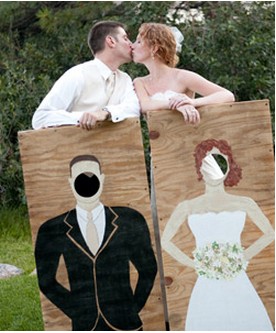
1. Cutout Photo Props
In 2010, the photo booth solidified its spot as a wedding staple, and we love this little twist on it. Use it as inspiration. You don’t have to have a bride and groom. Think: a muscle man or something that ties into your theme. Tip: When posing, stick your head all the way through the hole if it’s big enough. The picture will look more animated that way.
2. Veggie Centerpieces
Vegetables add a farmer's market, rustic-style look to any pretty little centerpiece. This year, we saw the artichoke rise to fame, and the radish is coming up behind as the breakout star for next year.
3. First-Dance Song Lighters
We nearly died of excitement when we saw this couple’s idea: handing out lighters for guests to wave during the first dance, totally ’90s-concert-style. It’s cute, romantic and gets everyone involved. It also makes for a great photo op.
4. Decked-Out Escort Cards
We’ve seen so many creative and cool escort card displays this year, it was tough narrowing them down for this slideshow. One of our top picks was this sewing-inspired display complete with spools, and the cards were decorated with vintage buttons and pins.
5. Fabric-Inspired Decor
This bride found a few fabrics she loved and then used them all over the reception, from the table linens to the custom-made wine bottle stickers.
5 Ways Facebook Can Ruin Your Wedding


1Someone in your family found out on Facebook.
As soon as you change your status (woot!), there's a family member or friend who's mad they didn't get the announcement via phone.
Our advice: Before you officially change your Facebook status, call your immediate family and closest friends with the news. Other friends and not-so-close relatives might appreciate a heartfelt email with the good news and your engagement story.
2A so-called friend left a snarky comment on your Facebook wall about your ring photos.
Those ring photos that you posted in postengagement bliss? Apparently, a sapphire is "just not their style."
Our advice: Take the high road and ignore the comment. This would be the perfect time to clean closet and hide this person from your feed. (PS: We think sapphires are stunning.)
3People assume they're invited to your wedding because you're Facebook friends.
For some, it's hard to draw the line between friend and Facebook friend. Those who aren't invited will inevitably post on your wall about their wedding invitation that's lost in the mail.
Our advice: Refrain from sharing every detail of your wedding on Facebook. If (and when) you get the self-invited guest post on your wall, let them know that your venue and budget can only allow for a certain number of guests. (Hint: It's not them.)
4Some think that Facebook is the new RSVP card.
It's hard to believe but we've heard of more than one couple who's received a casual, "We'll be there. And so will our four-plus guests," Facebook message.
Our advice: Respond by asking them to return their card (that one with the stamp). This would also be the perfect time to politely inform them that you've reserved two seats in their honor and can't wait to party together on your wedding day.
5Facebook has made prewedding party privacy a thing of the past.
The bridal shower photos that were posted by your maid of honor might have a third cousin peeved because she didn't get an invite. And those bachelorette pics from your not-so-innocent Vegas trip gave everyone from your office a good laugh.
Our advice: Everyone loves sharing photos from wedding events -- you'll have tons of fun ones throughout your engagement. Create a wedding group on Facebook from the beginning to avoid hurt feelings and oversharing.
19 Problems Every Bride Deals With
1Q. How do I accommodate all the vegans, diabetics, Kosher-keepers, people with food allergies or who are on Atkins or
South Beach, and the just-don't-like-exotic-food types?
A. It's impossible to foresee every single wedding guest's dietary needs and preferences. Your best bet is to choose one or
two basic meat entrees and one meat-free entree, which will make vegetarians, dieters and picky eaters alike happy. Or
consider having a buffet- or family-style meal that includes a variety of foods that will please everyone's palate, and let
guests choose what they would like to and are able to eat. And remember that most people with specific food requirements
don't expect special treatment when they attend a wedding.
2Sneaky Savings
Q. What are some ways to trim the budget without sacrificing the things I want?
A. There are so many ways to cut costs without affecting your overall vision for your wedding. Of course, the fastest way
to slash prices is to cut your guest list. This will reduce your catering costs, invitations and even the number of
centerpieces and amount of decor you'll need. You can also save a big chunk of change by booking an off-peak season wedding
date or by having your wedding on any day of the week but Saturday. Some other sneaky ways to save? Hold your ceremony and
reception in one spot -- it will cut travel time for vendors you pay by the hour, along with transportation costs. Choose
flowers that are in-season and swap out costly flowers, like peonies, for look-alikes, like garden roses. Offer beer, wine
and a signature cocktail instead of a full bar. Serve comfort foods like barbecued chicken, mac and cheese, and corn --
it's trendy and often cheaper. Order a small or two-tiered cake for the cutting and then supplement it with a larger sheet
cake (hidden back in the kitchen). And wherever possible, reuse ceremony decor at your reception.
3Invitation Equality
Q. If I went to someone's wedding, am I obligated to invite them to mine?
A. It's your party -- if you don't want them there, don't feel guilted into sending an invite. Simply explain that your
wedding is going to be very small, and with two families to accommodate, it's just impossible to invite everyone you want
to. This might be a difficult conversation, but if they like and respect you enough to have invited you to their wedding,
they should understand where you're coming from.
4Engagement Party Etiquette
Q. Who is supposed to host our engagement party (and can we throw one ourselves)? And is it rude to have more than one?
A. Anyone can host an engagement party, although traditionally, the bride's parents host the first soiree. But more and
more couples are opting to throw their own engagement parties these days, so go for it! Also, you don't have to stop at
just one party. If you and your fiance want to have a party for your friends and family, your parents can have a separate
one later. The more the merrier!
5Footing the Bill
Q. Both my fiance's parents and my parents have agreed to help us pay for the wedding. Now how do we figure out who foots
the bill for what?
A. In days of yore (okay, as recently as the 1980s), the rules about who pays for what were much more strict. The bride's
family took care of the invitations, wedding consultant, gown and accessories, reception (including site, food, flowers,
photographer, videographer and music) and transportation. The groom's family paid for the marriage license, officiant,
bride's bouquet, boutonnieres, rehearsal dinner and honeymoon. Today, the division of financial duties is far more fluid.
Maybe one side feels strongly about the flowers, while the other side feels strongly about the band -- so go ahead and
split it up that way. See what's on your agenda; then find ways to make it even.
6Tradition Trade-Off
Q. My parents want us to have a traditional wedding, but we definitely don't. What should we do?
A. It's your wedding, and you should do it the way you want -- but keep in mind that it's a big day for your parents too.
Take their opinions into consideration, especially if they're paying for -- or helping to pay for -- the wedding. If you're
set on a city hall wedding and dinner, maybe you can do that and then have a church ceremony and reception with the works
the next day. Or maybe you're willing to nix the judge and have a minister marry you, as long as you get the intimate
reception. Sit down together and try to decide what's most important to everyone, then come up with a game plan that
everyone can live with.
7Tasteless Toasts
Q. At a friend's wedding, someone got ahold of the mic and delivered a drunken, inappropriate and unexpected toast. How can
I stop this from happening at my wedding?
A. Make sure your event planner, day-of coordinator and/or emcee knows specifically who is delivering each wedding toast,
in what order. And most important, lend specific instructions to the holder of the microphone (in most instances, your
bandleader or DJ) that they are not, under any circumstances, to hand the mic over to any other guest.
8Budgeting Bridesmaids
Q. A couple of my bridesmaids have complained about how expensive their dresses and other costs are adding up to be. How
should I deal?
A. Be considerate. It's likely that your maids will only wear this dress for a few hours, so don't make them hock their car
to be a part of your wedding. Choose a dress that's reasonably priced -- have them tell you what reasonable is -- or work
together with your party to find a dress that's within both their style and budget. Brides aren't required to pay for the
dresses, but if you want to spring for something pricey, consider adding it on to your own budget or paying for half. Try
to mitigate expenses elsewhere too -- if they're buying the dresses, don't make them also buy jewelry and shoes.
9Inviting the Boss
Q. I don't plan on inviting my boss or any of my coworkers, and I'm concerned they'll take it personally. Any advice?
A. You are under no obligation to invite your boss, or anyone for that matter, to your wedding. To avoid any false
expectations or hurt feelings, make it known to your coworkers and boss that your wedding is going to be limited to family
and close friends only. The fact that no one from work is being invited will help everyone, especially your boss, avoid
feeling excluded. It would also probably be smart to keep wedding talk in the workplace to a minimum.
10Giftless Guests
Q. Should we send thank-you cards to guests who came to our wedding but didn't give us cards or gifts?
A. All attendees deserve a handwritten thank-you—regardless of whether they gave you a gift. Now before you roll your eyes
and ignore this advice, remember: Guests may have taken time off from work to be there. Keep it simple and say something
like, "Thanks for coming! It meant so much that you could be there to celebrate with us." Try to include something personal
too, like how you loved their dance moves or the joke they told in the receiving line. Just resist the temptation to throw
in a "PS: We're registered at Macy's."
11RSVP Radio Silence
Q. If some guests don't RSVP, should we call them to find out if they'll come? Or can we assume that they're not coming?
A. As far as final head count goes, you should never assume. Call to see if they're coming. You never know -- maybe they
think they sent the response card, but it may be hiding under a pile of mail. If calling is a problem, assume that they're
coming and make sure there's enough food and seats for them. It's better to have extra grub and room than it is to have
neglected guests wondering where to sit!
12The Date Debate
Q. I invited my friend and her boyfriend (by name on the invite), but they recently broke up. Now she wants to bring
someone I don't like. Can I tell her no?
A. Because you worded the invitation correctly by having her boyfriend's name on the envelope (rather than "and guest"),
you have every right to say no. As a rule, invitations are nontransferable when people are invited by name. Try explaining
that you're not friendly with the guest and that you'd prefer that the guest list be limited to very good friends and
family. If you invited all of your single friends sans dates, let her know she won't be the only one coming solo (in case
that's her worry).
13Bridal Shower Guest List
Q. Who should I invite and not invite to my bridal shower? I don't want it to seem like a ploy to get lots of gifts.
A. You don't have to invite every woman who's invited to your wedding (think of the expense for your bridesmaids if you
did!). The guest list should include your closest female pals and relatives (and your fiance's mom, sis and other close
female friends and family). As for far-flung guests, sending a shower invite is a nice gesture even if you know they can't
attend -- it shows them that they're important to you and that you would've wanted them there.
14Registry Rules
Q. What's the politest way to let people know where we've registered?
A. Word of mouth is the best way to loop everyone in on your registry. Make sure your wedding party and parents know so
they can clue in guests who ask. It's okay to include the link to your wedding web page in your invites. And conveniently
enough, that's where you can post info like your registries. And remember that if people ask you where you're registered --
or even what you would like as a gift -- it's okay for you to tell them the names of the stores. By and large, you
shouldn't worry about it too much. People will ask and let others know.
15Odd One Out
Q. Let's just say there's a black sheep in my family. Should I feel obligated to invite her to my wedding?
A. Though you shouldn't feel obligated, you should definitely give it some serious thought. Talk to your parents and any
siblings about it and see what they think. If inviting her is going to cause you or your immediate family a lot of grief on
your wedding day, then don't. On the other hand, if her presence isn't going to adversely affect you, and her not getting
invited might create even more of a problem, then extend an invitation. Remember, just because you invite her doesn't mean
she'll come.
16Planning for No-Shows
Q. I've heard that typically 10 -- if not 20 -- percent of guests won't actually show up. Should I budget for the cost of
how many people I think will actually show up, instead of the cost of my entire wedding guest list?
A. In a word: No. This is a case where you should definitely err on the side of caution. While it's true that chances are
slim every last guest who RSVPs “yes” will definitely be able to make it to your wedding, it will be a huge headache for
you to scrounge up seats and plates if more guests than you planned for show up. The solution? Cut down your guest list to
a size your budget can manage, and until every last RSVP card has come in (and every last phone call to track down those
errant replies has gone out), assume that they're all going to be there.
17Plus-One Problems
Q. We're on a tight budget. Is it okay to invite single guests but not give them plus-ones?
A. Deal with this problem on a case-by-case basis. If you have unmarried friends and relatives in long-term relationships,
consider inviting their partners. (Even though they're not married, they're committed.) Then, invite your more single
friends and relatives without dates, rather than crossing them off your wedding guest list altogether. If anyone complains,
simply explain your dilemma: It was important that they be there, but that you couldn't afford to invite dates. Then,
carefully consider where to seat them at the wedding; they may not want to get stuck at a table full of couples.
18Hungry Vendors
Q. My wedding photographer told me that she and her assistant expect meals during the wedding reception. Am I supposed to
pay for their wedding meals, plus meals for other vendors, like the wedding band I hired?
A. It's nice to feed your wedding professionals if they're going to be working a four- to six-hour ceremony and reception.
But if your photographer expects a meal, she should include that in her contract. Also remember that your caterer will make
more food than is needed, "just in case," so there will likely be plenty for your wedding professionals to munch on. Or
arrange for your caterer to put together a quick platter for the photographer, musicians and others -- simple sandwiches
will do.
19No Kids Allowed
Q. Is it okay to have an adults-only (18 and up) guest list? If so, how do we spread the news?
A. It's completely legitimate to want an adults-only reception, especially for an evening affair. And most parents of young
children will jump at the chance for a night out without the kids. Even so, this is a sensitive topic, and putting "adult
reception" on your invites is a little too in-your-face, so take a more subtle tack. First, tell your parents, wedding
party and other close relatives and friends, so they can spread the word if any guests ask them. Second, the people whose
names are on your invitations are the only people invited to the wedding ("Mr. and Mrs. John Doe" means just the couple;
"The Doe Family" means little Suzie can come too). Most guests will take note of this and RSVP for just themselves. If they
RSVP for kids too, call them and explain that because of "budget constraints" (always the best excuse, even if it's not
true), you decided to invite only adults. Try to understand that some may be genuinely surprised or hurt, and be
understanding, but don't give in -- if you say yes once, the requests will start pouring in.
Subscribe to:
Posts (Atom)